
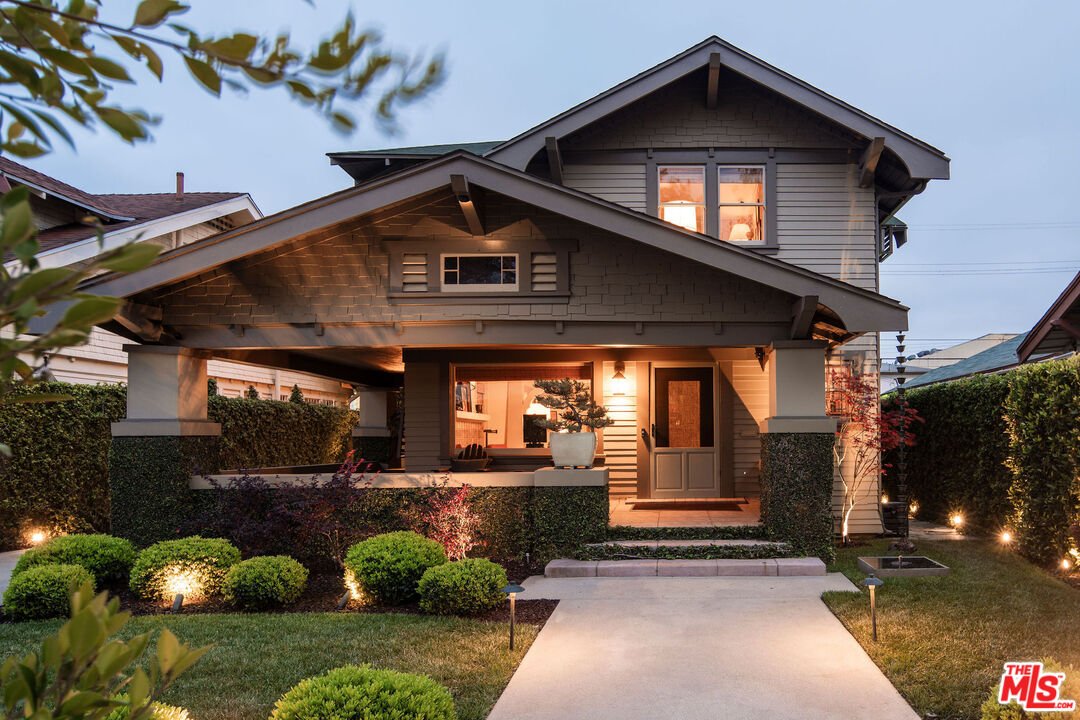
One of my favorite parts of selling historic homes throughout Los Angeles is seeing the craftsmanship that simply isn’t found in most newer construction. There’s something about walking into a 1915 Craftsman bungalow in Highland Park, or pulling up to a wide front porch in Mar Vista, that newer builds just can’t replicate. The exposed beams, the built-in bookcases, the warm wood tones throughout, these homes were made by hand, by people who took real pride in the work.
If you’ve spent any time house hunting on the Westside or in Northeast LA, you’ve probably fallen for at least one of these homes already. So let’s talk about what makes California Craftsman homes so special, where to find the best examples around Los Angeles, and what you need to know whether you’re buying one, selling one, or simply trying to take better care of one.
The Craftsman style emerged in the early 20th century as part of the broader Arts and Crafts movement, which began in England as a reaction against industrial mass production. It celebrated handcrafted quality, natural materials, and simple, functional design, and California, with its mild climate, abundant timber, and growing middle class, turned out to be the perfect place for the style to flourish.
Between 1905 and 1930, thousands of Craftsman homes were built across the state, and Los Angeles became one of the movement’s biggest strongholds. Architects like Greene and Greene elevated the style into something close to art, with custom woodwork and obsessive attention to detail. Locally, you can still see that legacy alive and well in neighborhoods like Pasadena, Highland Park, Eagle Rock, West Adams, Mar Vista, Venice, Santa Monica, and Culver City, all areas known for their concentration of beautifully preserved (and beautifully restored) Craftsman architecture.
These homes share a handful of signature features that make them instantly recognizable, and that’s a big part of why Los Angeles Craftsman homes hold their value so well over time.
· Exposed Beams and Rafters:
Wooden beams and rafters, often visible under wide overhanging eaves, are one of the most recognizable hallmarks of the style. They’re not just decorative, they’re a visible record of honest, quality construction.
· Wide Porches with Tapered Columns:
A deep, welcoming front porch with thick tapered columns resting on stone or brick piers is practically the signature of a Craftsman home. In a city built for outdoor living, these porches are made for morning coffee, evening conversations with neighbors, and showing off the curb appeal that makes these homes so desirable.
· Built-in Furniture and Woodwork:
Bookcases, window seats, sideboards, and cabinetry built directly into the architecture are common inside Craftsman homes, usually crafted from oak or other hardwoods and stained to highlight the natural grain.
· Low-Pitched Roofs and Overhanging Eaves:
The low-pitched rooflines with wide eaves aren’t just stylistic, they help shade the home from California sun while reinforcing that classic horizontal, grounded silhouette.
· Natural Materials and Earthy Colors:
Wood, stone, and brick dominate, paired with a muted, earthy color palette of browns, greens, and ochres that blends naturally with the Southern California landscape.
Buying a historic Craftsman home in Los Angeles is exciting, but it comes with a few things you’ll want to look at closely:
· Inspect original electrical and plumbing. Many of these homes still have some original systems, so a thorough inspection matters.
· Check for foundation settling. Older homes throughout LA, especially in earthquake country, can show signs of shifting over the decades.
· Review historic preservation restrictions. Some Craftsman homes sit within Historic Preservation Overlay Zones (HPOZs), which can affect what you’re allowed to change.
· Look for quality restorations versus cosmetic flips. Not every “updated” Craftsman was updated well, it’s worth knowing the difference before you fall in love with the photos.
· Preserve original woodwork wherever possible, it’s often the single biggest selling point.
· Highlight architectural details like exposed beams, built-ins, and original hardware in your listing description.
· Stage the front porch. It’s the first thing buyers see, and it sets the tone for everything that follows.
· Photograph the craftsmanship, not just the square footage. Close-up shots of woodwork and detailing tend to stop scrollers in their tracks.
· Price according to architectural significance. A well-preserved, original Craftsman in a sought-after pocket like Mar Vista or West Adams can command a real premium over a comparable but generic remodel.
Whether you’re buying your first Craftsman or preparing to sell one, understanding what makes these homes special can help protect their long-term value, and that starts with how you maintain them.
Preserve original woodwork. Clean, refinish, and repair rather than replace whenever you can. A skilled refinisher can usually restore decades-old wood to something close to its original beauty.
Maintain the wide porch. Inspect regularly for rot or damage, particularly around the columns and railings, and stick with paint or stain that matches the original color scheme.
Use period-appropriate materials. When repairs are needed, choose wood or composite shingles that resemble the originals, and steer clear of modern vinyl siding or aluminum windows that can undercut the home’s historic character.
Upgrade systems discreetly. Modern electrical, plumbing, and HVAC are important for comfort and safety, just try to route wiring and pipes through interior walls and closets, and choose fixtures that complement the Craftsman aesthetic rather than fight it.
Restore built-in furniture. A skilled carpenter can often repair or replicate damaged built-ins rather than removing them. Fresh cushions or natural-fiber upholstery can update the look without changing the bones.
Landscape to match. Native plants, stone pathways, and simple garden beds tend to complement Craftsman homes far better than formal or overly modern landscaping.
Historic Craftsman homes continue to command strong demand throughout Los Angeles because buyers appreciate their character, quality construction, and timeless appeal. In a market full of cookie-cutter flips and new construction that all starts to look the same, a well-preserved Craftsman stands out, and buyers know it. Neighborhoods like Venice, Santa Monica, Mar Vista, West Adams, Pasadena, Highland Park, Eagle Rock, and Culver City consistently see strong interest in their Craftsman inventory, often with buyers specifically searching for “Craftsman architecture” or “historic homes in Los Angeles” rather than just browsing general listings.
For buyers, that means a well-maintained Craftsman is a genuinely solid long-term investment. For sellers, it means presentation matters, buyers aren’t just purchasing square footage, they’re purchasing a piece of architectural history.
Why California Craftsman Homes Remain Popular Today
The enduring appeal of California Craftsman homes comes down to that blend of beauty, function, and connection to nature. They offer a warm, handcrafted living experience that contrasts with the often impersonal feel of newer developments, and in a city as fast-moving as Los Angeles, that kind of character is increasingly rare and increasingly valued.
Whether you’re an architecture lover, a first-time buyer, or a longtime homeowner thinking about your next move, understanding what makes these homes special, and how to care for them, is the best way to protect their charm for the next generation of owners.
—
Thinking about buying or selling a Craftsman home?
Whether you’re searching for a beautifully restored Craftsman, preparing to sell a historic property, or simply want to understand today’s market, I’d be happy to help.
**Katrina Gibson-Bragg**
Gibson-Bragg Real Estate
Real Estate Advisor | Keller Williams Westside Estates
323-691-9821
Gibson-BraggRealEstate.com